Bruce Bautista
Product Designer working across B2B2C -

Marketing Automation
Reducing manual work and improving conversion outcomes for
thousands of merchants
Product
web
My Role
Lead Designer
Team
Me
2 PMs
5 Engineers
Skills
Product design
Systems design
User research
Design systems
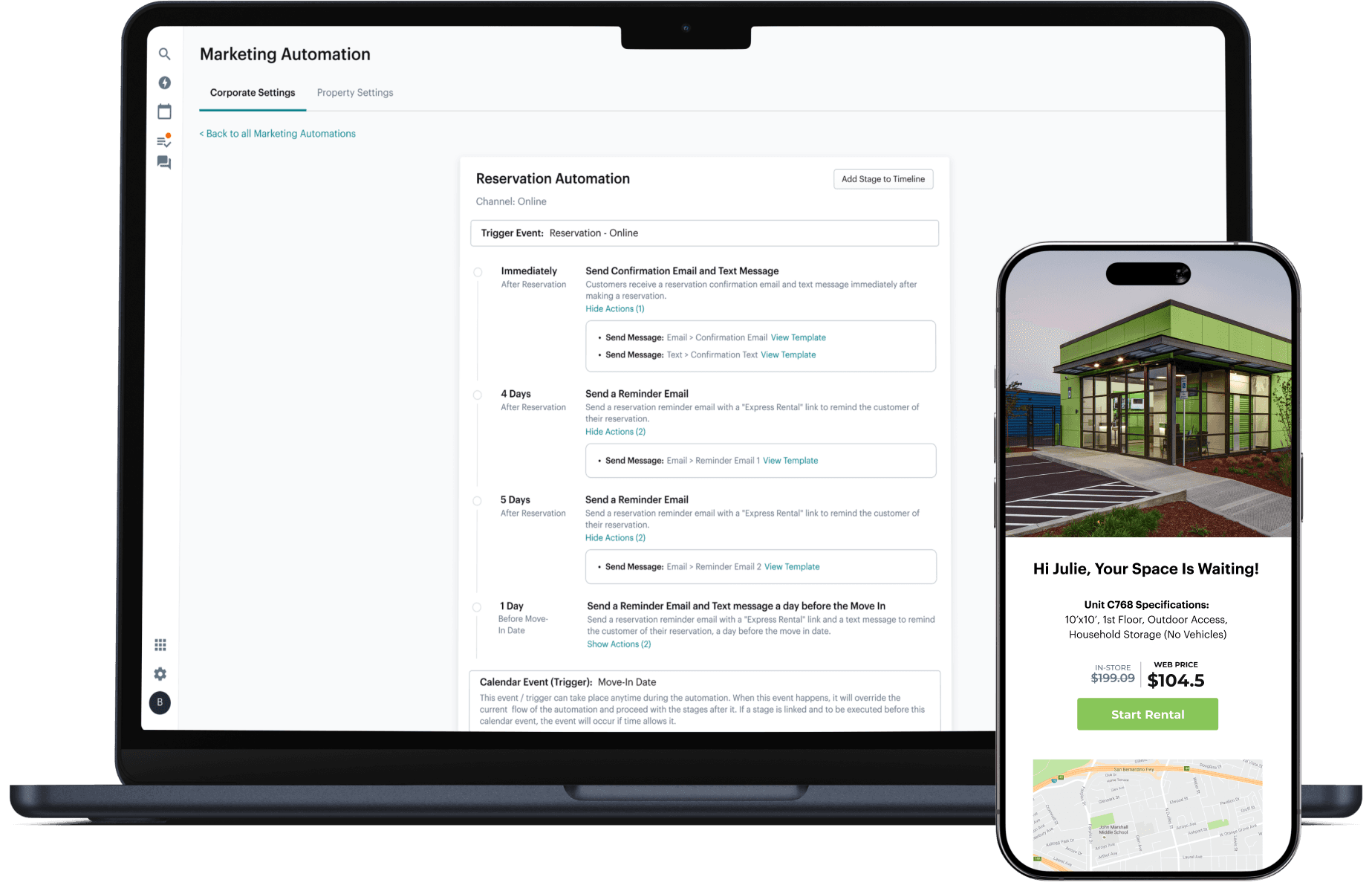

What the system is
A visual marketing automation platform that enables teams to design, configure, and execute multi-step customer journeys using triggers, conditions, stages, and actions.
Who is it for
Primarily designed for users who need to manage communication and engagement across large customer bases. Secondary users include internal teams who configure and maintain automation workflows that drive conversions, retention, and operational tasks across the platform.

Problem it solves
Replaces manual, fragmented outreach with automated, rule-based workflows, ensuring leads receive the right communication or action at the right time while reducing operational overhead.
12% increased
conversions
For our beta users
What complexities exists
Multi-step, branching workflows with triggers, conditions, and actions
Dependencies between stages and non-linear paths
Aligning a visual timeline with underlying system logic
Maintaining clarity and scalability as workflows grow in complexity
What success looks like
Success means users can confidently create and manage complex good marketing automation that runs reliably and measurable improves lead conversions and operational efficiency.
Design Process
Simplifying Complexity For Effortless Use
Problem Space
Our user is faced disconnected, manual, & loss in sale opportunities.
Disconnected systems
Lead management and tasks weren’t integrated, causing workflow gaps.
Manual follow-ups
Outreach was repetitive and time-consuming.
No standardization
Inconsistent marketing led to inefficiencies and lost leads.
Constraints
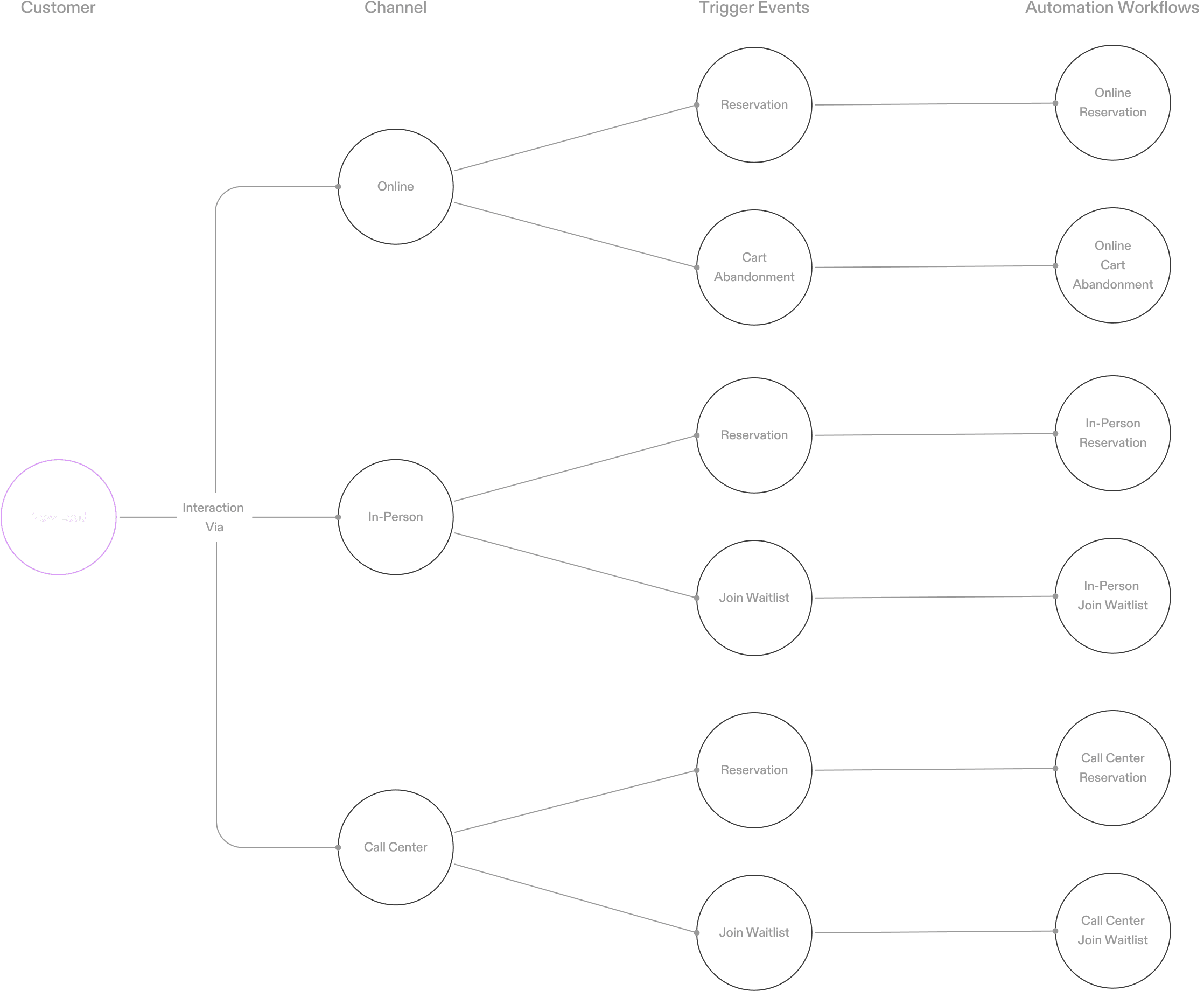
Multiple entry points (online, in-store, call center)
Workflows were non-linear and could branch or override each other
Users ranged from simple operators → power users
Needed to align with backend logic + technical limitations
Research
To design the right tool for users i needed to deeply understand
the lead's journey end to end.
Research
To design the right tool for users i needed to deeply understand
the lead's journey end to end.
Solution
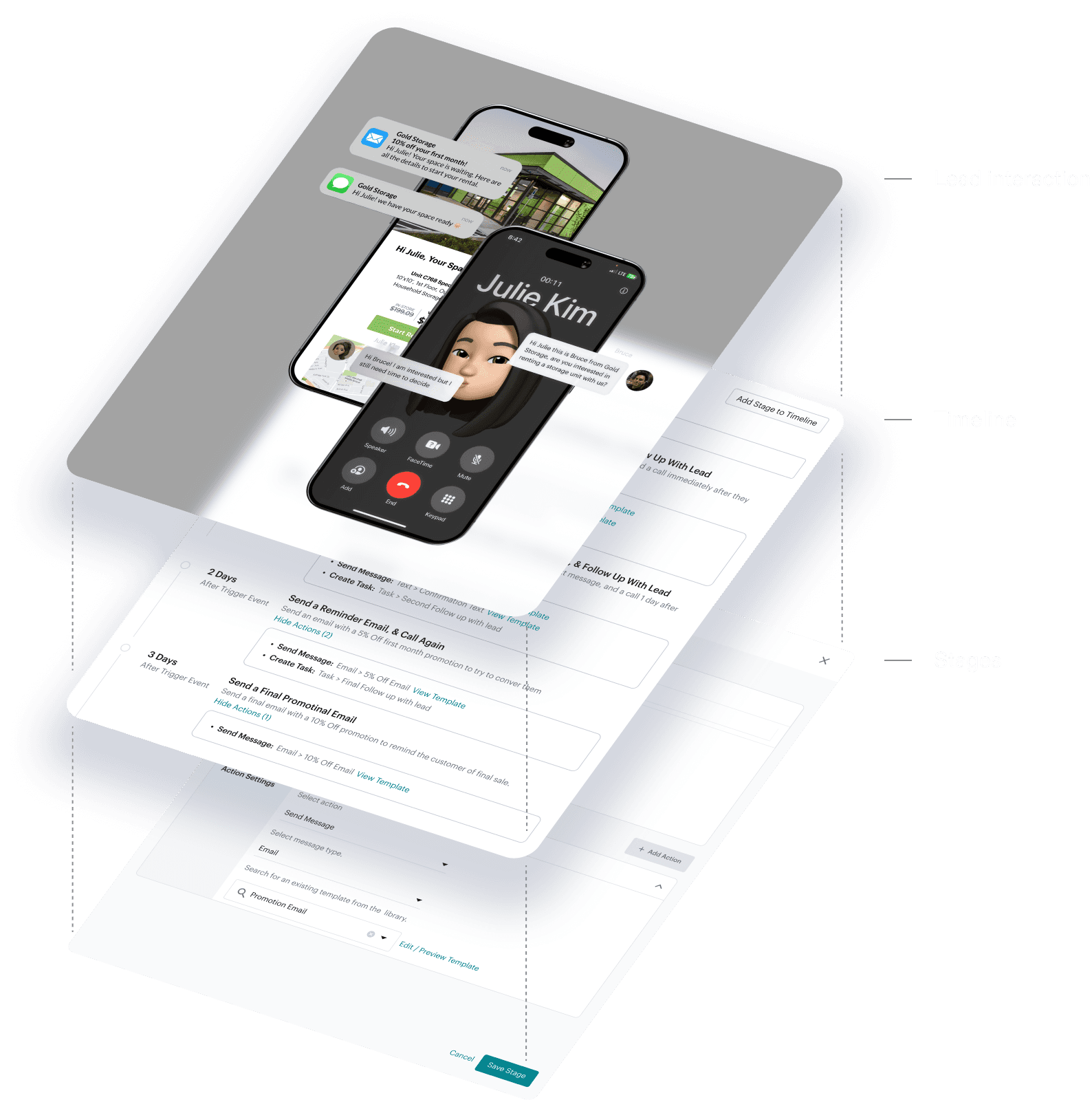
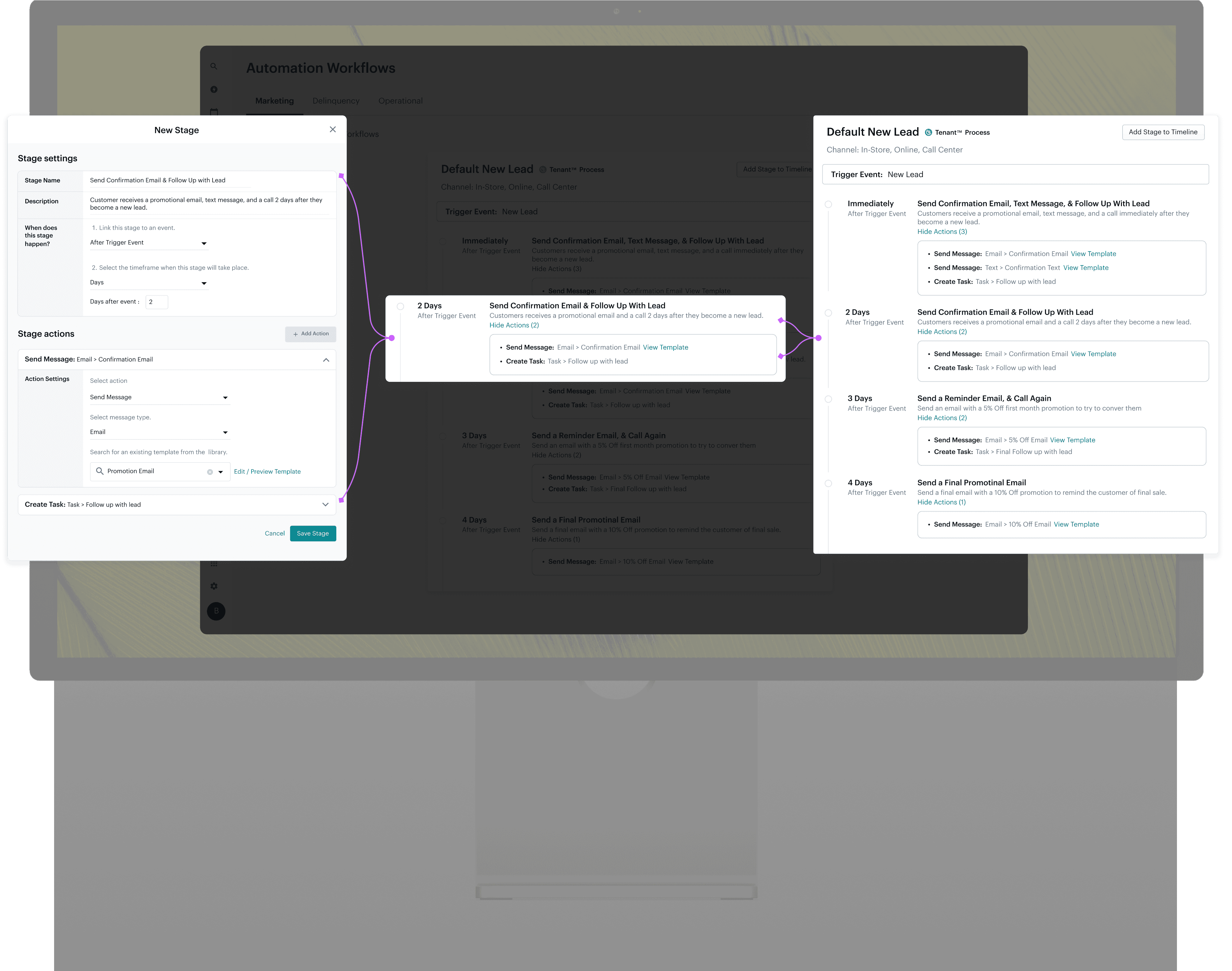
The system has a modular structure that allows users to link
stages and customize workflows to fit their unique lead strategies.
1. New lead is captured from website
2. Automation starts with a task to follow up with the lead
3. Phone call with new lead
4. Automation keeps going into the next stage
5. Lead receives personalized email
1. New lead is captured from website
2. Automation starts with a task to follow up with the lead
3. Phone call with new lead
4. Automation keeps going into the next stage
5. Lead receives personalized email
1. New lead is captured from website
2. Automation starts with a task to follow up with the lead
3. Phone call with new lead
4. Automation keeps going into the next stage
5. Lead receives personalized email
1. New lead is captured from website
2. Automation starts with a task to follow up with the lead
3. Phone call with new lead
4. Automation keeps going into the next stage
5. Lead receives personalized email
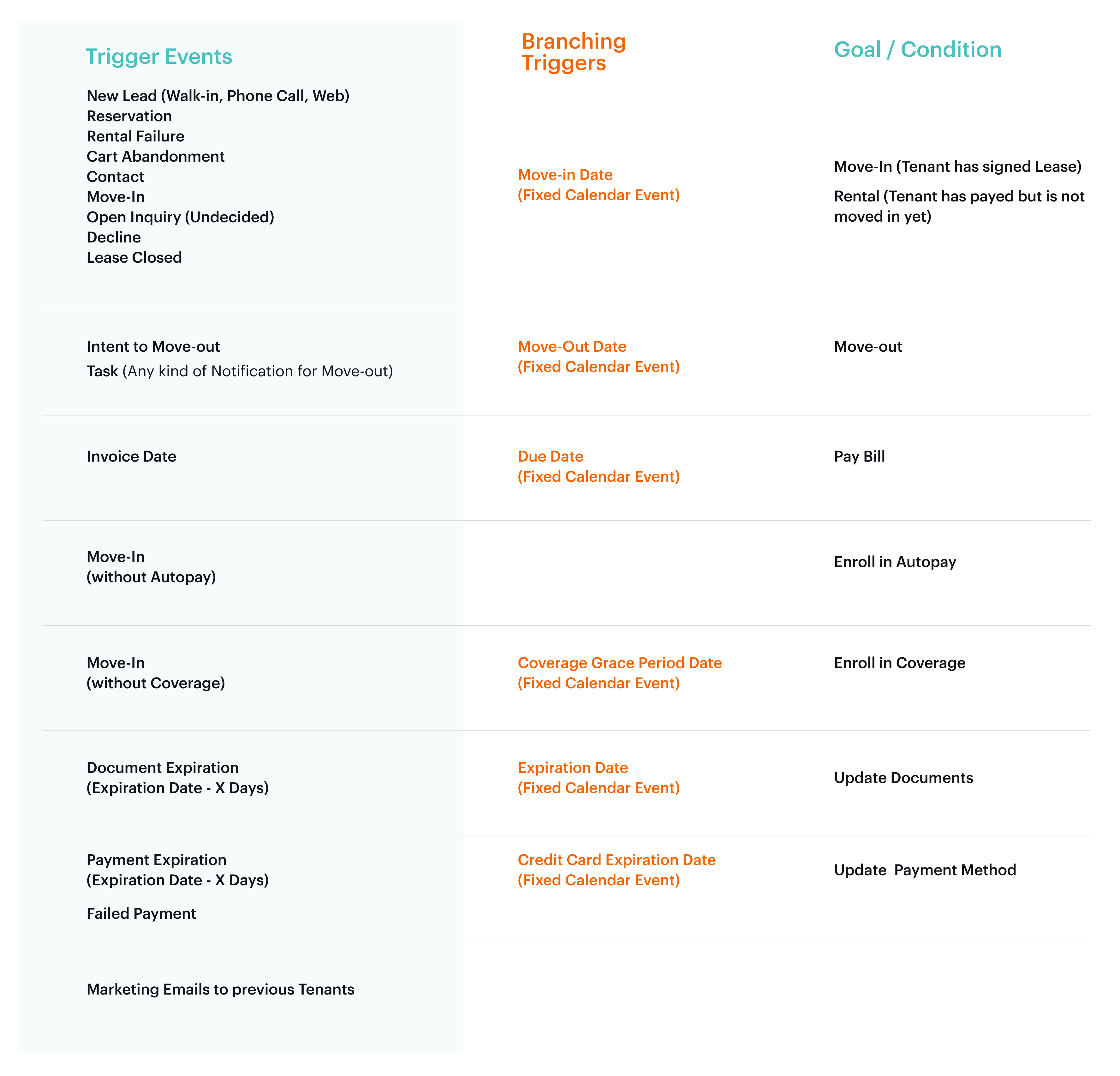
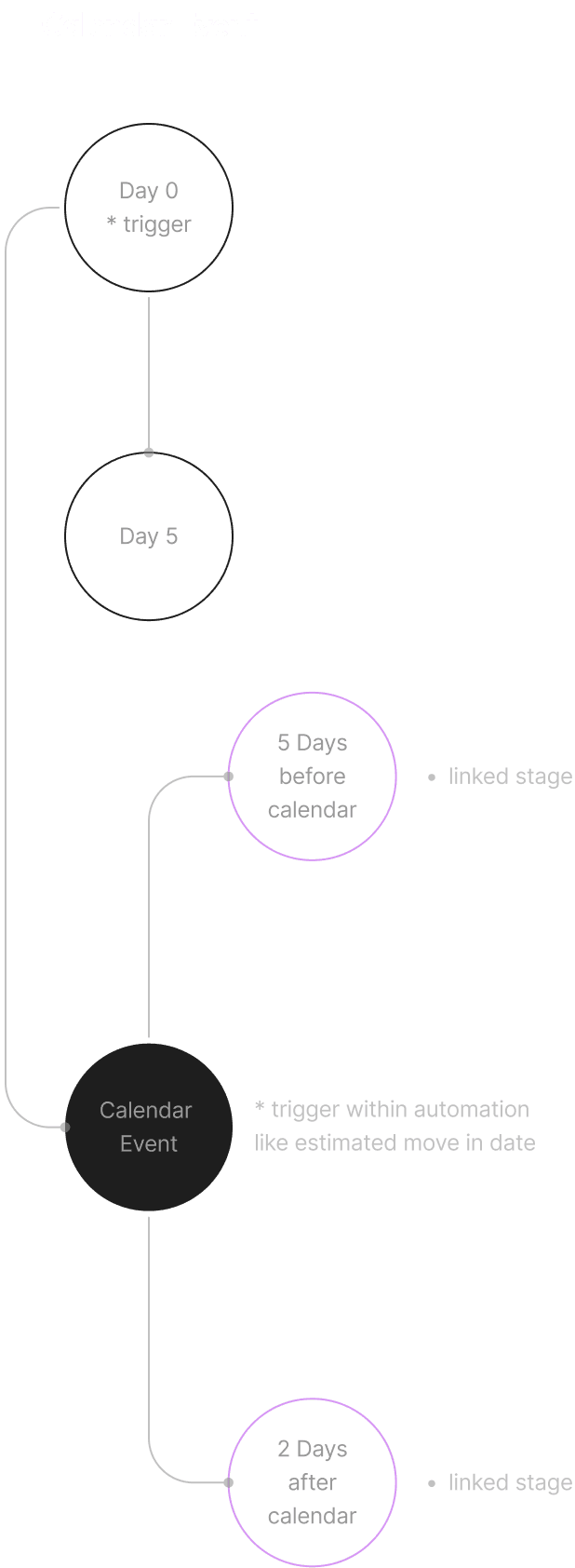
Branching
Logic
Design System
The architecture defines how the system behaves,
and the timeline is how users understand and control that behavior.
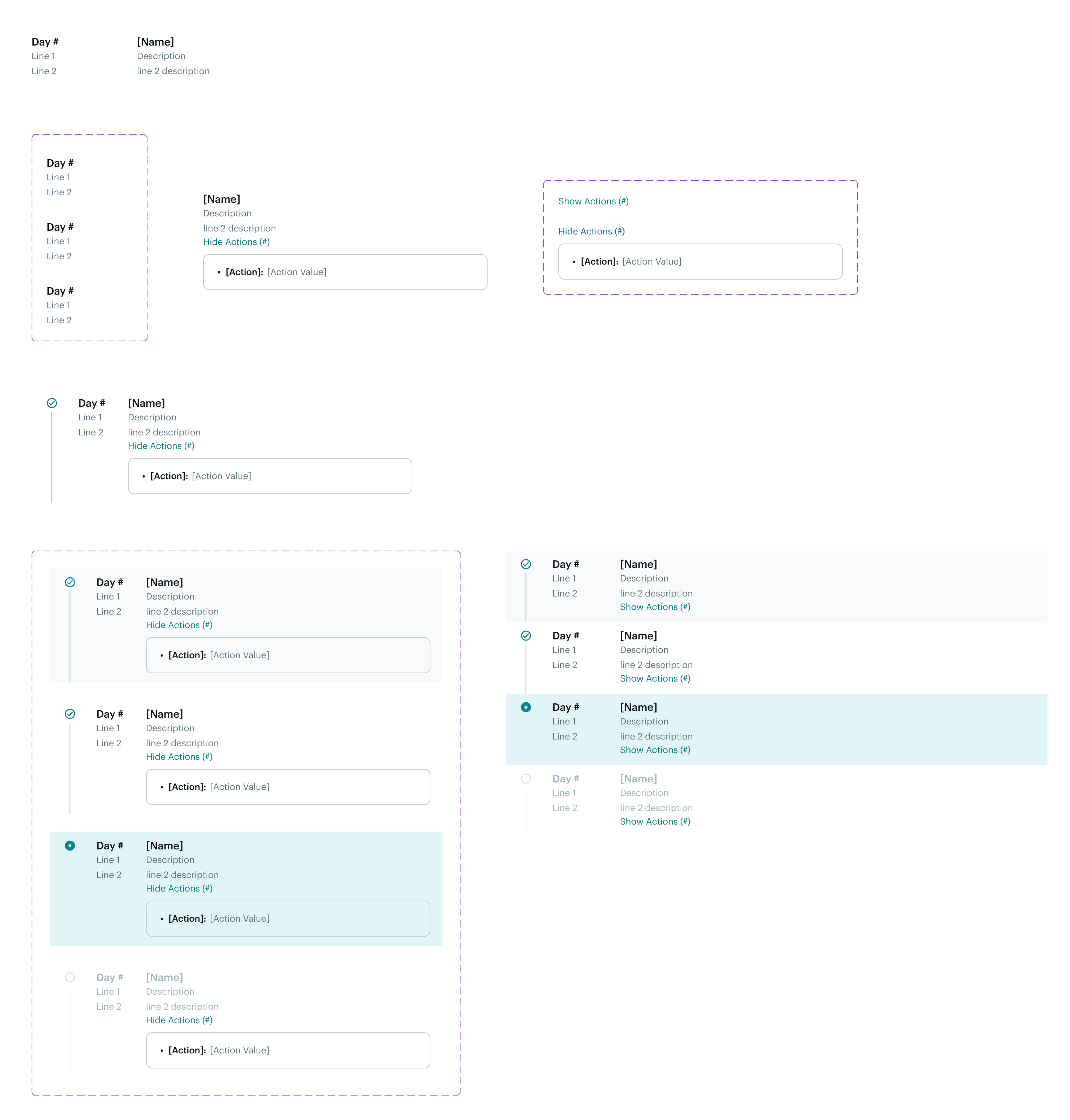
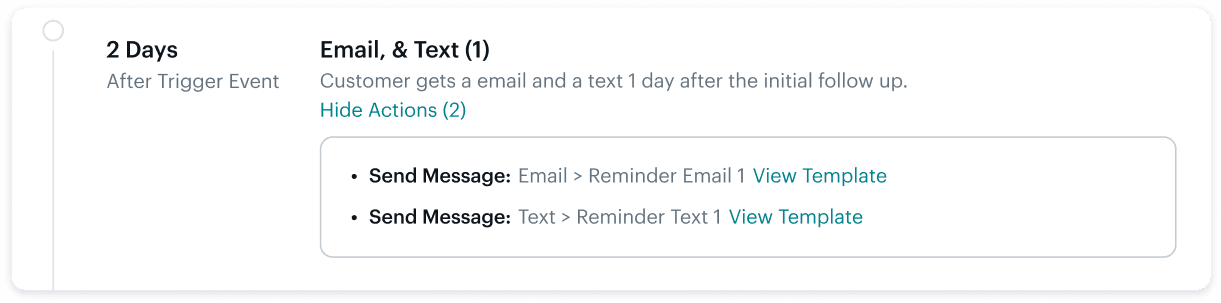
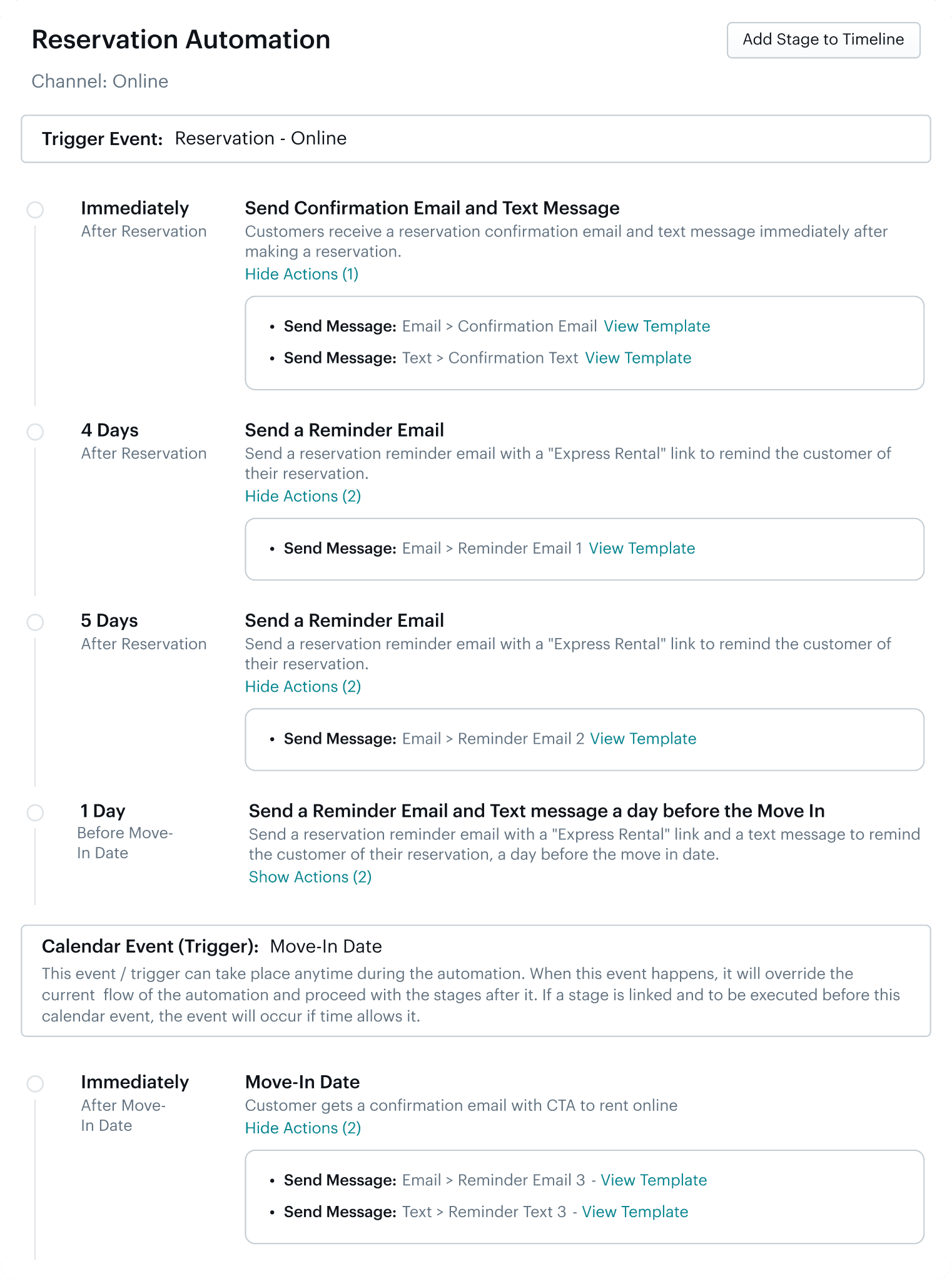
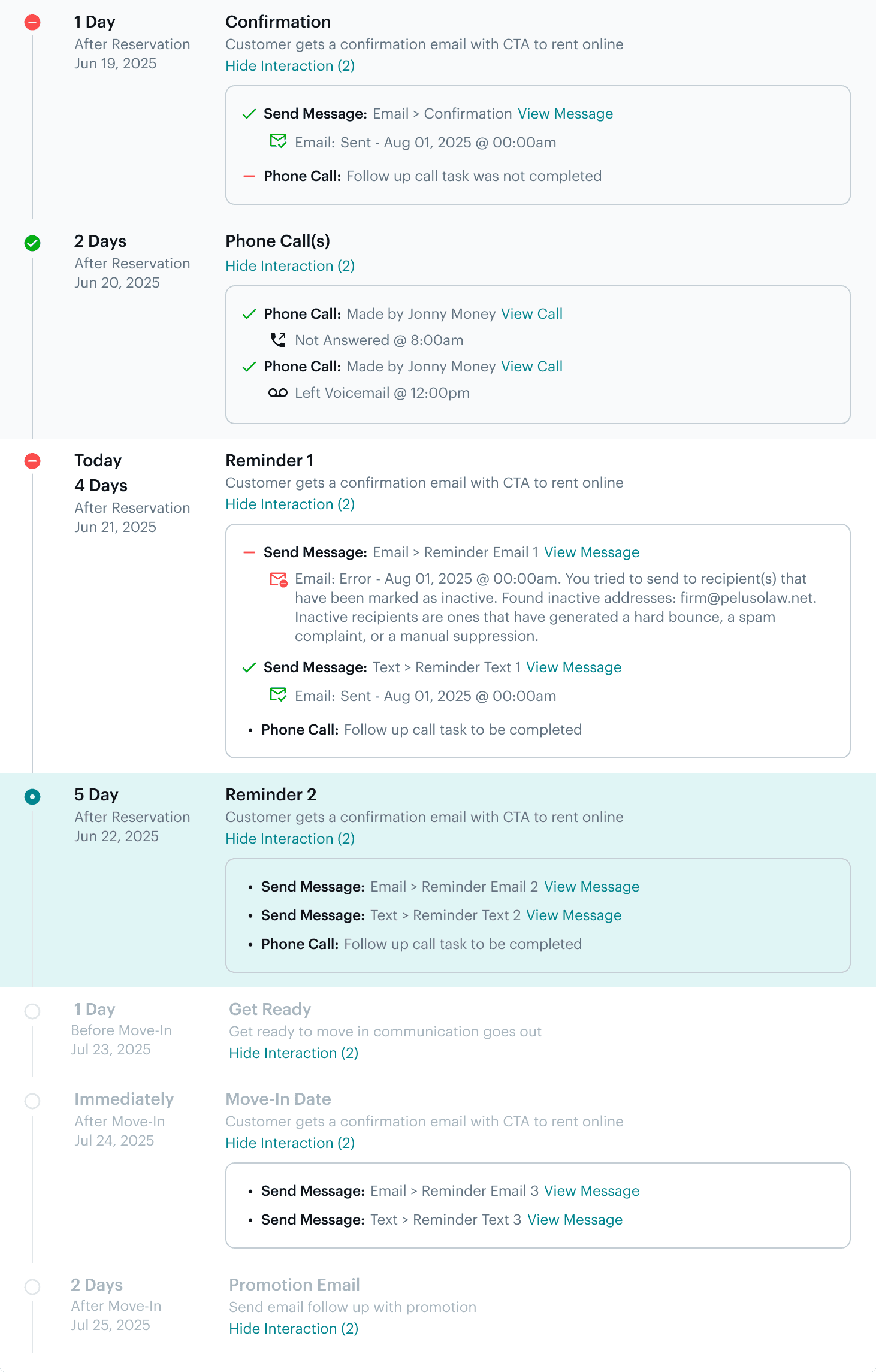
Timeline component
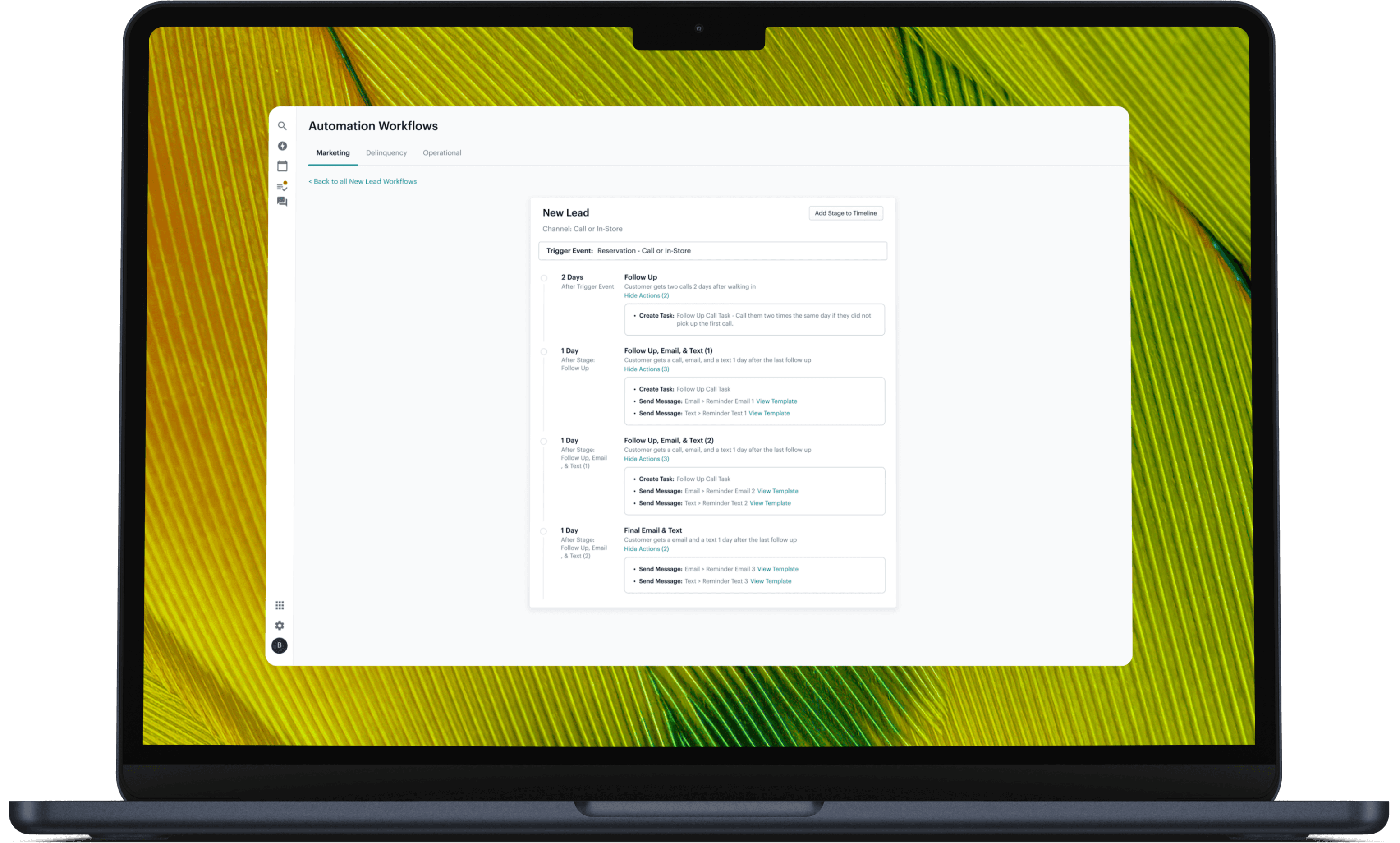
Applied automation logic to design a modular timeline system using atomic principles that visualizes how actions stack and flow over time, scalable across features and use cases.
Dev Collaboration
Before & After
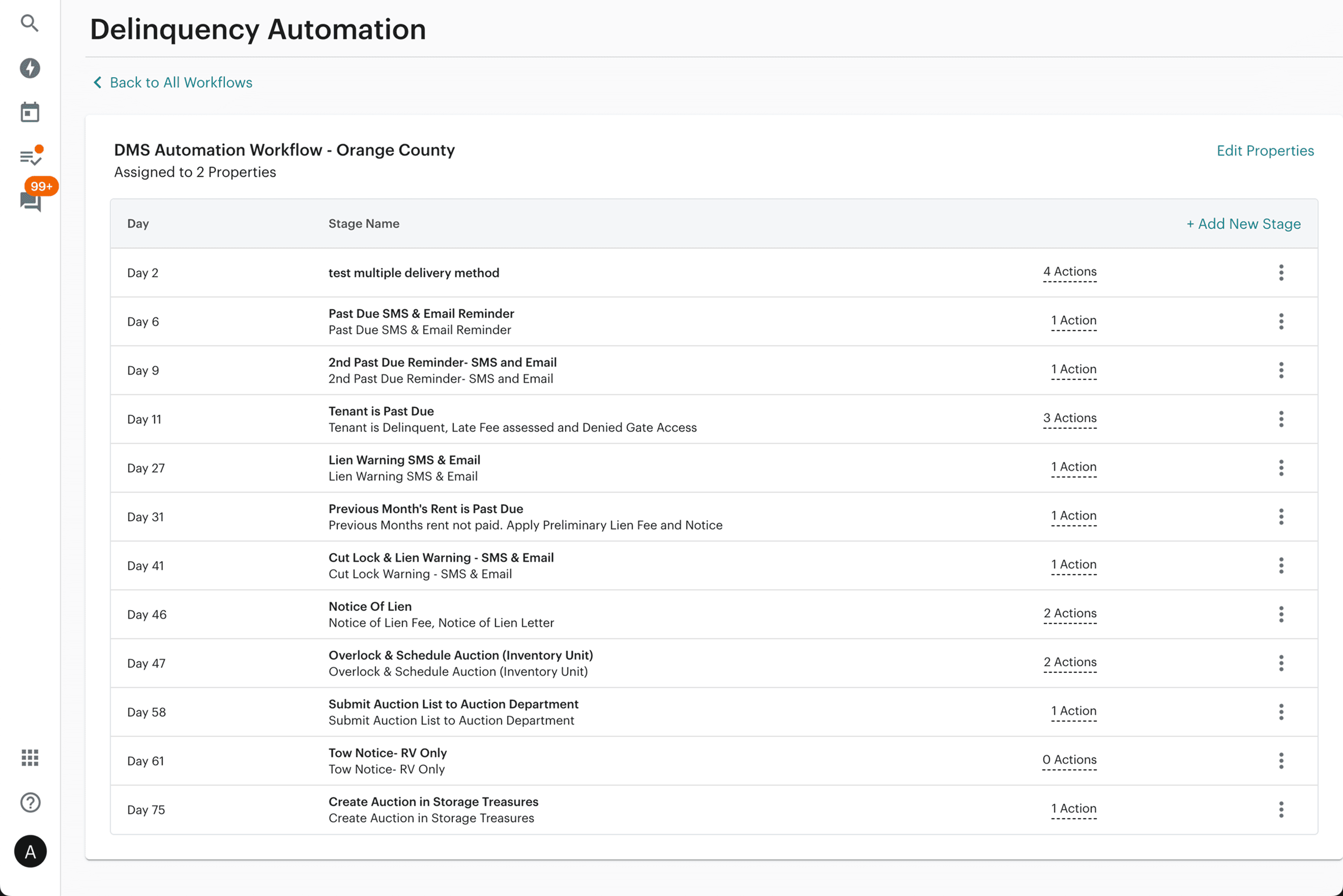
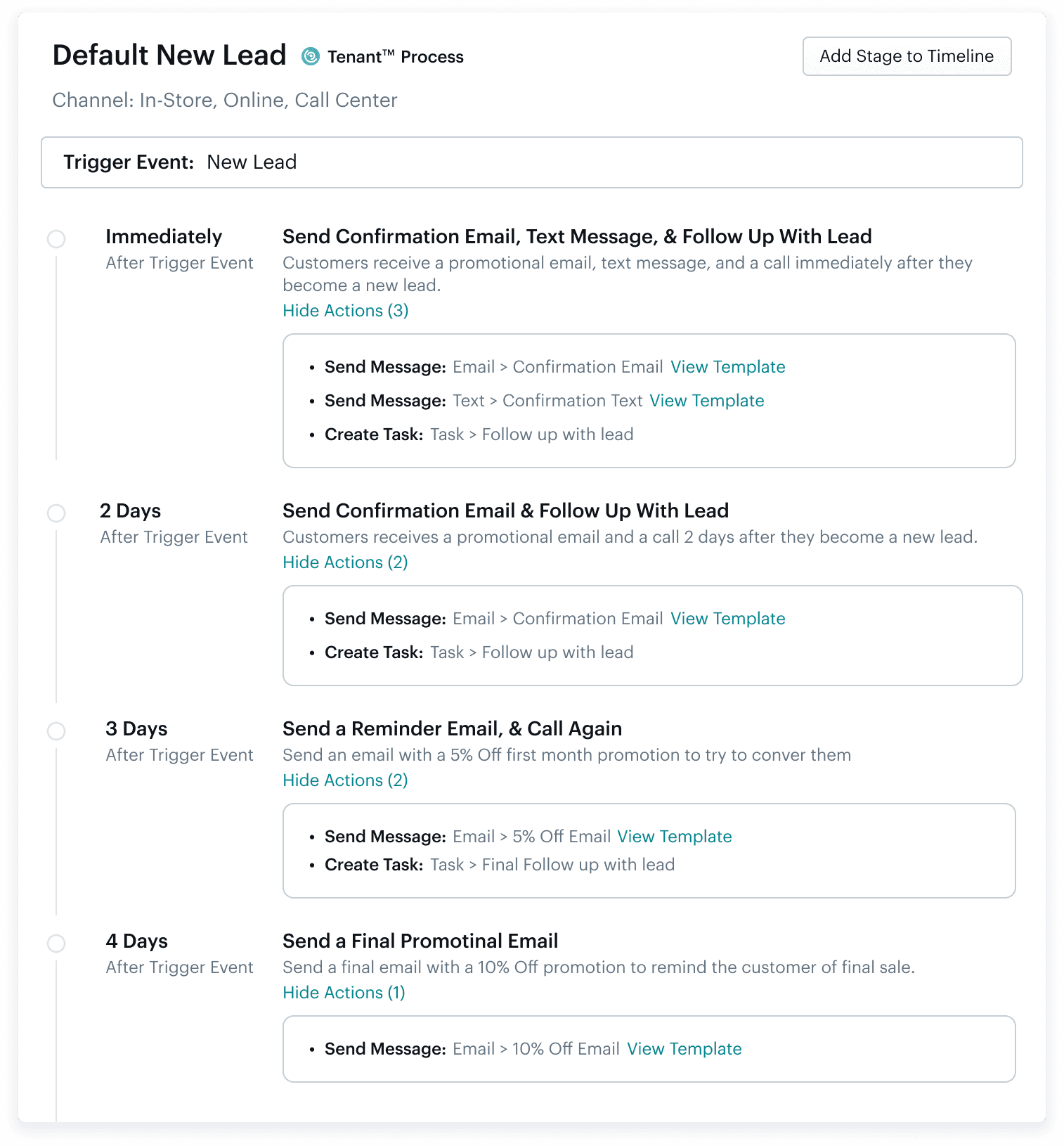
Timeline with
user actions
(Variant)
What I learned
I gained a deeper understanding of product and UX architecture, which is the core of design work. My primary goal was to enable users to engage with their customers more efficiently and boost sales, without getting overwhelmed by a complex tool.


Business Impacts
Leads
Ensures leads are nurtured instantly and consistently, boosting close rates.
Tasks
Removes repetitive tasks, freeing users to focus on high-touch or in-person work.
Consistency
Brings consistency across properties, improving band trust and reliability
Structure
The system introduces structure and data — making it easier to iterate and optimize the sales funnel.
Retention
Becomes a value-add that helps Tenant Inc. retain customers by helping them grown their business
Thank you